


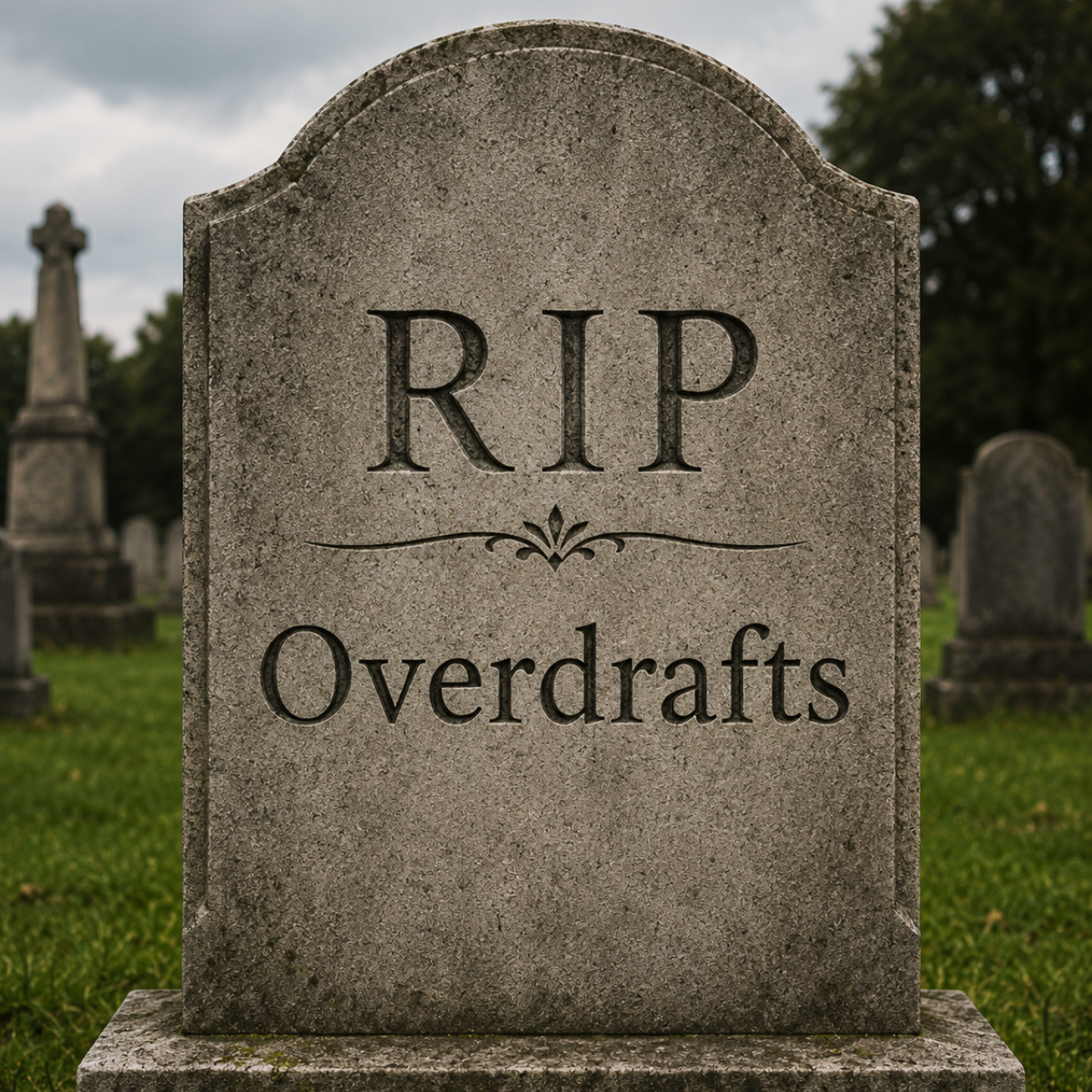
The quiet disappearance of the business overdraft
For decades, the business overdraft was the safety net, something that sat in the background and gave business owners confidence that if cash flow tightened or an unexpected bill landed, there was room to manoeuvre.
If a company had a good relationship with its bank manager and the fundamentals of the business were sound, an overdraft was usually part of the conversation. It wasn’t always used – but knowing it was there was important. For many business owners, that facility felt like part of the furniture, but over the last 10–15 years something’s changed. Overdrafts haven’t disappeared overnight – they’ve simply become harder to obtain and far less flexible than they once were.
Most businesses assume that’s because banks have become more cautious, but the reality is a bit more complicated than that.
What actually changed
A lot of the shift comes down to changes in lending rules and insolvency legislation, which altered how comfortable banks feel about unsecured or loosely secured borrowing. Historically, banks could justify overdrafts because they were backed by strong security over the business. If things went wrong, the bank had a clear position in the repayment hierarchy and understood exactly where it stood.
Over time that position has adjusted – legislative changes altered how different forms of security work in insolvency situations, particularly around the priority of charges over business assets. In simple terms, the bank’s ability to recover money became less predictable, and once lenders can’t clearly see how they’ll get their money back, the risk calculation changes. When that happens – the product starts to disappear.
Why overdrafts became less attractive to banks
From a bank’s perspective, overdrafts gradually became harder to justify because they’re flexible, which businesses love, but that same flexibility makes them unpredictable from a lending point of view.
The bank can’t easily see when the balance will reduce or how borrowing will behave over time, and when you combine that with reduced security comfort and tighter regulation, the commercial case becomes difficult. So instead of removing overdrafts entirely, banks slowly moved towards more structured lending – including term loans, asset finance and invoice finance. Facilities where the repayment profile is clearer, the security position is easier to understand, and the risk can be priced more accurately. There wasn’t some big announcement where banks declared the overdraft dead – it just happened gradually.
One year you could increase your overdraft fairly easily, the next year the bank suggested a different type of facility instead.
The knock-on effect for SMEs
The difficulty is that overdrafts solved a very specific problem, because they were designed to deal with short-term working capital fluctuations. A business might dip into the facility one month and clear it the next. It was simple, flexible and easy to understand.
When those facilities became harder to secure, many SMEs found themselves facing a funding gap – the business might be perfectly healthy, but the traditional tool they relied on to smooth cash flow simply wasn’t available anymore. That gap is where alternative commercial finance solutions started stepping in.
Invoice finance, revolving facilities, short-term loans and asset-based lending now fill much of the space that overdrafts once occupied, and in many cases, they’re better suited to how modern businesses operate. They’re just not always as familiar to business owners.
Why businesses still ask for overdrafts
Interestingly, many business owners still ask for overdrafts first, not because it’s necessarily the best option but because it’s the one they recognise. For years the conversation with the bank manager went something like:
“Turnover’s growing, we’re a bit tight this quarter – can we increase the overdraft?”
That was a completely normal business discussion, but today the funding landscape is much broader, yet that old mental model still exists. Businesses ask for the product they know rather than the one that might fit the situation better. If something worked for twenty years, it’s natural to assume it still should.
The real question isn’t overdrafts – it’s flexibility
In reality, most businesses aren’t really asking for an overdraft, they’re asking how to manage uneven cash flow. That’s still exactly the same challenge it was twenty years ago, the difference is that the range of solutions has expanded significantly. An overdraft might still exist in some cases, but more often the answer sits somewhere else in the commercial finance toolkit, and the key is understanding how the business actually trades and then matching the finance to that reality. Finance works best when it fits the shape of the business, not when the business has to squeeze itself into the shape of the product.
That’s where experience still matters – overdrafts haven’t disappeared, but the world around them has changed.
If you’d like some help picking your way through the options, get in touch.